
Wine Investing in 2026: A New Era of Strategy, Value, and Global Forces
The world of fine wine investing in 2026 is the product of more than two decades of remarkable transformation. What began in the early 2000s as a niche sub-sector of alternative assets—dominated by collectors, merchants, and auction houses—has become a sophisticated, internationally traded asset class. Over the last 25 years, wine has moved from the periphery of alternative investment portfolios to a recognized store of value, offering low correlation with equities and bonds, resilience through certain economic cycles, and tangible, consumable beauty. But to understand the present and anticipate the future, it’s necessary to trace how wine investing evolved through major turning points: globalisation in the early 2000s, the rise of China’s buying power in the 2010s, the COVID-19 boom and post-pandemic correction, and the pressing influence of climate change on production and scarcity.
The Early 2000s: Inception of Modern Wine Investment
In the early 2000s, fine wine investing was largely the domain of a few dedicated collectors and wealthy enthusiasts. The concept of wine as an asset class was still nascent, but two dynamics were already in place that would define its future trajectory. First, the internet began to democratize access to wine market data and trading platforms. Wine merchants and auction houses started offering global online bidding, bringing buyers from disparate geographies onto unified marketplaces. Second, indices like the Liv-Ex Fine Wine 100 were introduced, offering collectors empirical signals of price performance across different regions and vintages.
During this period, the primary drivers of value were traditional prestige regions—Bordeaux first growths, top Burgundy grands crus, mature vintage Champagne, and established cult Napa producers. Liquidity was concentrated in London and Paris auctions, and investors tended to hold wine for many years, often for decades, before realizing value.
Crucially, wine investing at this time was guided by principles that still matter in 2026: rarity, producer reputation, provenance, and long-term scarcity. But pricing was less efficient, markets were less global, and collectors had limited tools to track prices in real time.
The 2010s: China Emerges and Global Demand Expands
The 2010s were defined by the rise of China as a dominant force in fine wine demand. What had been a largely Western collector base expanded dramatically as middle-class wealth in China surged and interest in Western luxury goods grew. Bordeaux, long the bedrock of investment wine in the early 2000s, experienced phenomenal price growth during this period, driven by Chinese buyers seeking status, culture, and tangible assets.
At the same time, global wine indices posted robust gains, and Burgundy began to eclipse Bordeaux in terms of price growth, especially at the top end. Smaller production, biodynamic mystique, and intense collector focus made Burgundy’s grands crus especially prized. Champagne also gained global cachet, particularly prestige cuvées, which became staples at celebrations in China, Southeast Asia, and the Middle East.
For investors, this was a golden decade. Secondary markets became more liquid, data platforms proliferated, and the consensus view was that fine wine was a hedge against inflation and financial instability. Bordeaux’s 2009 and 2010 vintages became iconic, Burgundy legends like Romanée-Conti skyrocketed, and rare Champagnes traded at multiples of retail price.
However, by the end of the decade, certain bubbles were visible. Bordeaux prices reached levels that discouraged new buyers, and Burgundy—already limited in supply—became almost prohibitively expensive for many investors. This set the stage for the next great inflection point: the COVID-19 era.
COVID-19: The Great Boom and Structural Shift
When COVID-19 arrived in 2020, financial markets faced unprecedented volatility, and asset allocators sought alternative stores of value. Fine wine, with its non-correlated return profile and physical substance, suddenly became attractive not just to collectors, but also to hedge funds, family offices, and newer wealth classes generated by tech growth during lockdowns.
Between 2020 and 2022, wine prices across many regions reached parabolic highs. Italy’s Super Tuscans, top Burgundy producers, rare Champagnes, and established Bordeaux names all saw dramatic appreciation. Average trade volumes on global platforms surged, and new buyer cohorts emerged from North America, Europe, and Southeast Asia.
This boom, however, was unique in its underlying drivers. It was not merely the continuation of China-led demand; rather, it was broad global capital flows searching for yield and diversification. With interest rates at historic lows, fine wine — alongside other alternatives like art and classic cars — enjoyed unprecedented inflows.
Yet this boom was not sustainable. By 2023, macroeconomic conditions began to shift. Rising interest rates in developed economies, inflationary pressures on consumers, and a normalization of global trade conspired to cool market exuberance. Fine wine prices began to correct. Some regions that had been the biggest beneficiaries of the boom — especially high-end Burgundy and speculative Bordeaux lots — experienced the sharpest pullbacks. It was a much-needed market rebalancing, returning focus from sentiment‐driven buying to fundamentals: liquidity, scarcity, and proven global demand.
The Post-COVID Era: Correction and Selectivity
By 2024 and into 2025, fine wine markets were in a state of strategic adjustment. Advanced buyers with sophisticated data tools began differentiating between wines with authentic global demand and those with overinflated pandemic premiums. Secondary market volumes declined from boom peaks but stabilized at higher baselines than pre-COVID levels. Indices with broad coverage showed mild net declines or flat performance after the shock of correction, but wines with deep liquidity and global reach held up better than niche speculative lots.
One of the enduring effects of this period was that fine wine investing became more discerning. Investors no longer chase broad regional indices. Instead, they analyse specific producers, vintage quality differentials, and market bid patterns. The geography of demand shifted too. European bidders, particularly from the UK and continental hubs, regained share. Asia — while still critical — became more selective, prioritizing prestige cuvées and names with long histories of cross-border demand. The United States, once less prominent in secondary trading, increased its presence, especially around premium Napa and certain Italian reds.
In 2026, the fine wine market is balanced between mature collectible names with established liquidity and emerging value in regions and producers that matured through the past decade. This environment favours strategy over speculation, long-term holding over rapid flips, and careful regional diversification over concentrated bets.
Climate Change: A Market Force, Not an Abstract Threat
One of the most transformative factors shaping wine investing in 2026—and one that distinguishes this era from the early 2000s—is climate change. What used to be a relatively predictable agricultural cycle is now markedly volatile. Warming trends in Europe have pushed historic wine regions to adapt. Bordeaux and Burgundy have seen harvest timing shifts, vintage variability, and stress on traditional varietals. Champagne producers, in particular, have struggled with rising temperatures that accelerate ripening and force adjustments in vineyard management, blending strategies, and even appellation norms.
In Italy, climate stress has varied by region. While Tuscany’s warmer slopes have matured reliably for certain years, Piedmont’s high-altitude vineyards offer cooler microclimates that buffer against heat spikes. Spanish producers, especially in Ribera del Duero and Priorat, face rising risk of drought stress, which limits yield and increases scarcity. In the New World, California’s recurring heat waves, wildfire smoke risks, and water scarcity issues have increased vintage variability even for iconic Napa producers.
For investors, climate change introduces a new dimension of risk and opportunity. Rarity driven by constrained supply can enhance future value, but it also makes pricing more unpredictable. Investors in 2026 must consider not only producer reputation and global demand but also the climatic context of vineyard regions, assessing how long-term environmental trends may alter production volumes and consistency. Wines from regions with stable terroirs and adaptive vineyard practices may outperform those from areas with increasing climatic volatility.
China and Global Demand: A Reset, Not a Retreat
In the 2010s and early 2020s, China was the catalyst for much of the fine wine price expansion. Today, Chinese purchasing remains significant, but its dynamics have shifted. Rather than leading with broad speculative buying across regions, Chinese buyers in 2026 are more targeted. Prestige cuvées from Champagne, elite Italian producers, and hard-to-find New World icons enjoy strong demand. But broader categories, especially mid-tier Bordeaux, no longer command the speculative premiums they once did. China remains a vital piece of the global wine puzzle—but as one of several major demand centres, alongside Europe and North America.
This more nuanced demand profile has stabilized certain categories while exposing others to realistic valuation pressure. For example, Italian reds with consistent global recognition — Super Tuscans and Piedmont icons — have benefited from renewed Chinese interest. Champagne prestige cuvées also perform well internationally because of celebration demand and gifting culture. By contrast, wines that were popular in mid-boom speculation but lacked sustained demand foundations now show more muted performance. In 2026, global demand is neither China-centric nor Western-centric; it is truly multi-polar, and that is shaping how investors allocate across regions and producers.
What Wines to Buy by the Case in 2026 for a Solid Return
As we look forward to the next decade, a conservative and growth-oriented wine investment portfolio should reflect diversification, liquidity, prestige, and climatic resilience. Below is a strategic framework for selecting cases that balance immediate market appeal with long-term value appreciation. This is not a short list of trends, but a reasoned blend of producers and regions with historical performance, global demand, and adaptability.
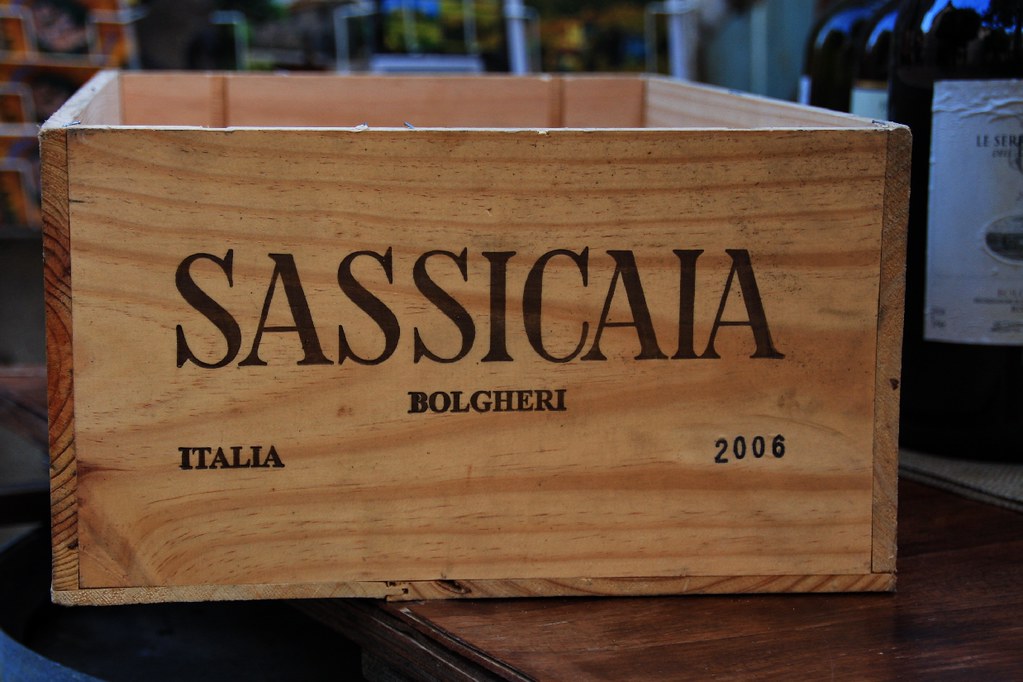
Italy: Italy remains one of the most attractive arenas for fine wine investment outside the classic French strongholds. Its producers benefit from strong recognition in Europe, Asia, and North America, and its wines often trade at a relative discount compared to equivalent Burgundy. Cases from top Super Tuscan names like Sassicaia, Ornellaia, Tignanello, and Solaia offer both brand power and consistent secondary market liquidity. In northern Italy, Barolo from iconic houses such as Giacomo Conterno and Bruno Giacosa carries global respect and aging potential. Italian holdings are likely to remain foundational in diversified portfolios because of their balance of price and prestige.
Champagne: Premium Champagne has a unique role because it combines collectible appeal with cultural consumption demand. Prestige cuvées from producers such as Krug, Dom Pérignon (especially advanced-release P2 or P3 bottlings), Louis Roederer Cristal, and Pol Roger Sir Winston Churchill continue to attract global buyer interest across multiple markets. These are not wines that sit in a collector’s vault; they are celebrated around the world, giving them both investment appeal and real demand support.
Rhône: The Rhône Valley represents a segment where quality and value intersect. Top Côte-Rôtie from Guigal’s La La series, Hermitage from Jean-Louis Chave, and Châteauneuf-du-Pape from respected estates like Clos des Papes offer an alternative to extremely expensive Burgundy with similar collector interest. Rhône wines also benefit from comparative climate adaptability; certain appellations retain cooler hillside sites that mitigate some warming threats.
Spain: Historically undervalued, Spain’s flagship producers now offer compelling upside potential. Vega Sicilia Único stands as Spain’s marquee collectible wine with international demand to match. Ribera del Duero cult producers like Pingus (and derivatives like Flor de Pingus) bring scarcity and prestige. Rioja’s Gran Reservas provide additional depth, often with strong long-term aging profiles that appeal to collectors who prioritize drinking maturity over rapid turnover.
New World Icons: In the New World, wine investing can be more concentrated, but certain blue-chip names maintain global market interest. Napa Valley remains central in American fine wine, but investors should be selective. Estates with international presence and predictable trading history, such as Opus One and Dominus, often outperform broader, less liquid labels. In Australia, Penfolds Grange continues to hold strong brand equity and demand in Asia.
Conclusion: Wine Investing in 2026 and Beyond
Wine investing in 2026 stands at the intersection of tradition and evolution. The lessons from the early 2000s, the boom fueled by China and global capital flows, the correction post-COVID, and the pressing realities of climate change have collectively reshaped the landscape. Today, investing in fine wine is not about catching speculative surges; it is about disciplined selection, global demand awareness, climatic context, and long-term holding.
Over the next decade, the wines that are most likely to deliver solid returns will be those with:
-
Proven global demand: not regional hype
-
Secondary market liquidity: not one-off speculative spikes
-
Producer reputation and consistency: not flash-in-the-pan critics’ darling status
-
Climatic resilience: vineyards capable of adapting to environmental shifts
-
Multi-market appeal: buyer interest across Europe, Asia, and North America
Investors who internalize these principles and focus on diversified case acquisitions from the kinds of producers outlined above — Italy’s Super Tuscans and Barolo icons, premium Champagne prestige cuvées, elite Rhône holdings, flagship Spanish reds, and select New World icons — position themselves to benefit from the structural forces shaping the fine wine market in 2026 and beyond.
Fine wine remains an asset class where patience, knowledge, and global perspective are rewarded. The next decade belongs not to speculation, but to strategy — and for those willing to think deeply about quality, demand, and long-term value, the rewards can be substantial.
Storing fine wine over the longer term
Storing fine wine properly is essential if you want to preserve both its drinking quality and its investment value. Unlike everyday bottles that are consumed within a year or two, fine wine is often cellared for decades, and poor storage can permanently damage it. Temperature, humidity, light, position, and provenance all play critical roles in maintaining condition and resale value.
The single most important factor is temperature stability. Fine wine should be stored at around 12–14°C, with minimal fluctuation. Sudden changes cause the liquid to expand and contract, which can push wine past the cork and allow oxygen in. Consistent cool conditions slow the ageing process and protect structure and aromatics. Avoid storing wine in kitchens, garages, or lofts where seasonal swings can be extreme.
Humidity is also crucial. Ideal relative humidity sits between 60% and 75%. Too dry, and corks can shrink, allowing air to seep in and oxidise the wine. Too damp, and labels may deteriorate, which can reduce resale value even if the wine itself is unaffected. For investment-grade bottles, label condition matters also.
Light exposure should be minimised. Ultraviolet light can prematurely age wine and degrade delicate compounds. This is why most fine wines are bottled in dark glass. Store bottles in darkness or low light environments, away from direct sunlight.
Bottles sealed with cork should be stored horizontally. This keeps the cork moist, preventing shrinkage and maintaining an airtight seal. Screw-cap bottles are less sensitive to orientation but are still best stored lying down for consistency.
For serious investors, professional bonded storage or a premium storage wine fridge from a brand like EuroCave or SwissCave is essential.
Ultimately, proper storage is not an optional detail; it is fundamental to protecting both the financial and sensory integrity of fine wine over time.