
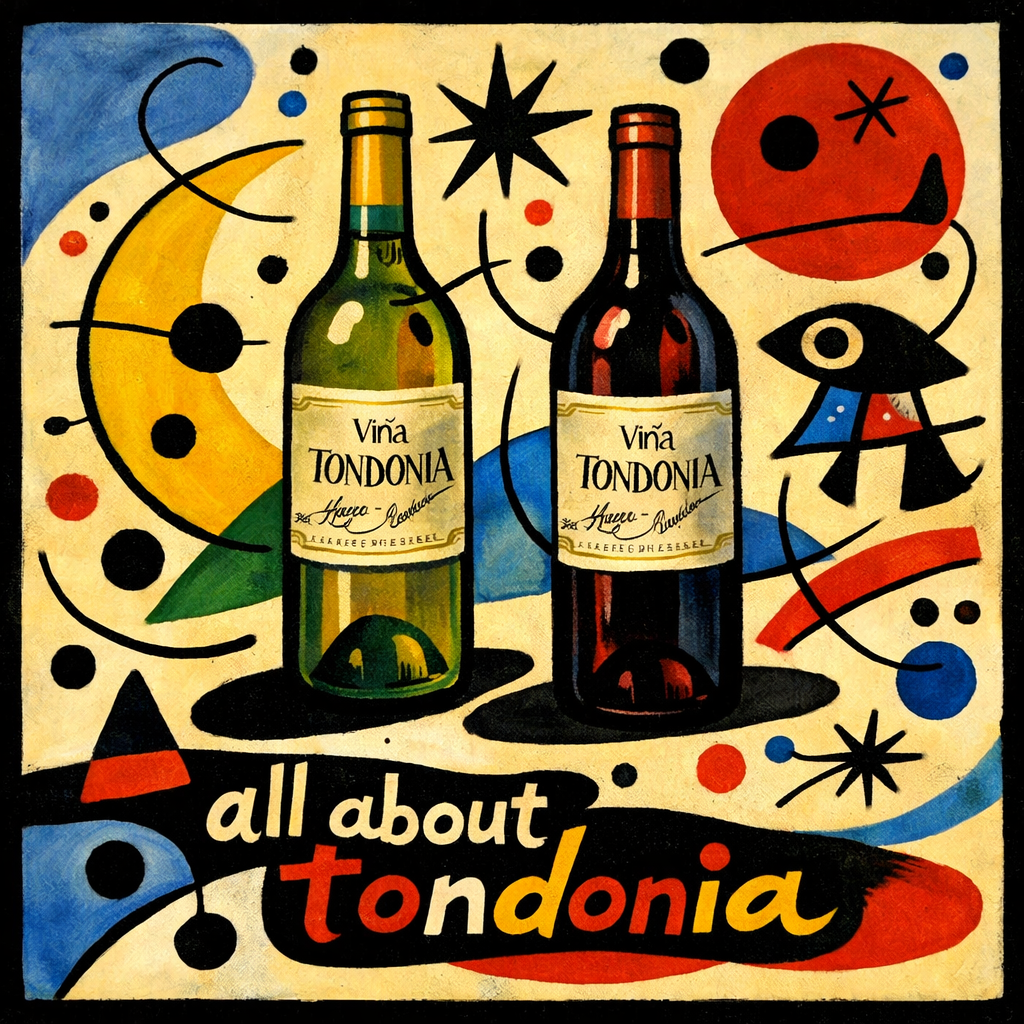
Viña Tondonia: The Living Legacy of Traditional Rioja
Few names in Spanish wine inspire as much reverence as Viña Tondonia. Produced by Bodegas López de Heredia, this is wine that resists trends, honours history, and drinks in a language all its own. Modern wine lovers often speak of innovation, micro-terroir and technology — but Tondonia speaks of patience, depth and time. To understand it fully, we must explore its origins, land, wines and the context in which it exists today.
I. A History Steeped in Tradition
The story of Viña Tondonia begins with Bodegas López de Heredia, one of Rioja’s oldest and most distinguished families of winemakers. Founded in the late 19th century, the winery established its own estate vineyards early on — including Viña Tondonia — demonstrating a commitment to controlling quality from vine to bottle long before that phrase became fashionable.
Over generations, López de Heredia made choices that would distinguish them from other producers. While others embraced modernization — temperature-controlled fermentation, stainless steel, short-term aging — López de Heredia doubled down on slow, traditional methods. They aged their wines for years in large American oak barrels, bottled them only after prolonged maturation, and let time, not technology, drive the evolution of the wine.
This has made the winery something of a time capsule. Bottles released today can be a decade or more removed from their vintage, and many vintages from the mid-20th century are still alive and expressive. For many drinkers and collectors, Tondonia represents the soul of old Rioja — a style that predates modern market pressures and remains largely unchanged.
Over the years, this deep respect for tradition has created both admiration and mystery. Younger winemakers look to López de Heredia as a benchmark for ageworthy Rioja; collectors prize its long-lived bottles; and ordinary drinkers often discover that a glass of Tondonia is unlike most wines they’ve experienced. It is less about ripe fruit and more about the interplay of time, oxygen, and nuanced aromatic development.
II. Location and Terroir: Where Tondonia Takes Shape
Geographic Setting
Viña Tondonia lies on the right bank of the River Ebro, near the town of Haro — the heartland of Rioja Alta. This region sits at moderate elevation, where Atlantic influences clash gently with the warming effects of the inland climate. The result is a growing season that is long enough to ripen fruit fully but cool enough to preserve freshness and acidity.
The river plays a subtle but important role. It moderates temperature fluctuations, softens frosts, and contributes to the microclimate of the vineyards that the López de Heredia family has farmed for generations.
Soils and Structure
The soils of Tondonia are varied, often with a foundation of alluvial deposits, clay and limestone with interspersed gravel. These soils drain well yet retain enough water to sustain the vines through dry spells. Clay adds body and depth to the wines, while limestone contributes structure and a whisper of mineral tension.
Importantly, these aren’t uniform vineyards. Micro-variations in soil composition, aspect and drainage mean subtle differences across plots — differences that López de Heredia’s careful blending strategies take into account as they assemble the final wine.
Climate and Growing Conditions
Rioja Alta’s climate is neither extreme nor predictable. Cool winters slowly transition into springs that may vary widely in rainfall and temperature. Summers bring warmth — sometimes heat — but are tempered by elevation and occasional Atlantic breezes. The fall harvest can be long and drawn out, especially in cooler years, allowing phenolic maturity without excessive sugar accumulation.
This climate is ideal for Tempranillo, Rioja’s signature red grape, because Tempranillo thrives when it can ripen slowly without losing acidity. For whites made from Viura and Malvasía, this environment allows the preservation of lift and aromatic clarity even as extended oak aging ultimately reshapes the wine’s flavour profile.
Many winemakers in Rioja see the region’s climate as a gift — one that demands respect and patience. Too much heat accelerates ripening and compresses harvest windows; too much rain invites disease pressure. The delicate balance that Rioja Alta strikes is a cornerstone of Tondonia’s style.

III. The Full Variety of Wines Produced
Viña Tondonia is not a single wine but a family of wines — each reflecting a part of the estate’s potential and López de Heredia’s philosophy.
1. Viña Tondonia Tinto (Red Wines)
These are the flagship reds. Typically dominated by Tempranillo, with smaller components of Garnacha, Graciano and Mazuelo, the Tinto wines come in multiple classifications:
-
Crianza — less common from this house, but approachable earlier.
-
Reserva — a step into deeper complexity, often aged extensively before release.
-
Gran Reserva — the greatest expression, spending years in oak then bottle before ever reaching market.
What makes these wines unique is the extended use of large American oak barrels and the deliberate oxidation that comes with long barrel aging. The character that results is not flashy fruit, but layered spice, tobacco leaf, dried cherry, cedar and an almost savory depth that unfolds slowly.
2. Viña Tondonia Blanco (White Wines)
Unlike most white wines, which pale quickly with age, Tondonia Blancos are built to live and evolve. Made predominantly from Viura with a portion of Malvasía, these whites spend years in barrel and bottle before release, developing flavors that range from toasted nuts and honeyed evolutions to bright citrus and orchard fruit density.
The idea of aging white wines for long periods — even decades — flies in the face of modern trends. But for López de Heredia, it is simply another facet of the estate’s patient approach.
3. Rosado and Select Variants
On occasion, Tondonia also produces rosé expressions and other small-batch variants depending on vintage conditions. These are less consistent year-to-year but reflect the same principles: meticulous selection, extended maturation and a focus on complexity over simplicity.
4. How Tondonia Is Assembled
López de Heredia approaches blending as a craft of nuance. The goal is not to chase a rigid house profile but to respect vintage expression while maintaining stylistic continuity. Multiple barrel lots from different parcels are evaluated over years, then assembled only when they demonstrate balance, structure and the capacity for long-term evolution.
IV. Best Vintages — A Collector’s Perspective
Rioja wines in general — and Tondonia in particular — are less about individual vintage fireworks and more about how a wine ages over decades. Some years have proven especially expressive, often because they balanced ripeness, acidity and tannin perfectly.
Red Wines
Certain vintages have ascended to near-mythic status among collectors and critics alike:
-
Classics of the 20th Century: These early decades produced wines that are still alive and profound. Vintages from the 1960s and 1970s often show a combination of maturity and freshness rarely matched in wines elsewhere.
-
1990s & Early 2000s: Years like 1994 and 2001 frequently appear on lists of benchmark Rioja Gran Reservas. They offer depth of fruit framed by smoky, spicy, tertiary notes that seem made for decades of contemplation.
-
More Recent Accolades: Vintages from the 2010s — particularly 2010 and 2012 — are appreciated for their balance and modern translation of classic Rioja nuance. These wines are still evolving, and many believe they will develop gracefully over the next two or three decades.
White Wines
Exceptional Blancos are rarer but deeply loved. Vintage–aged Tondonia Blancos from the mid-20th century are treasures in collector cellars, offering oxidative complexity that rivals the greatest aged whites anywhere — rich, nutty, crystalline and utterly unique.
Because Tondonia white demands extended aging, older vintages are often more interesting than recent releases — a reversal of most white wine narratives.
How Vintage Differences Manifest
What makes vintage variation fascinating with Tondonia is how the wine’s personality unfolds over time. Cooler years may produce wines with higher acidity and finer tannin, which age toward precision and tension. Warmer years may show richer, broader phenolics that develop plush complexity with time.
In every case, the wines reward patience — often several decades of it.
The Best Vina Tondonia of the last 25 years?
Among Viña Tondonia Reserva red wines from the last 25 years, the 2010 vintage is widely regarded by critics as one of the very best. The 2010 Viña Tondonia Reserva received very high scores (around ~96–97 points) from top reviewers such as Robert Parker and James Suckling, who praised its complexity, structure and classic Rioja character — with polished tannins, elegant fruit depth and great aging potential.
This 2010 vintage exemplifies the traditional López de Heredia style: long barrel and bottle aging before release, resulting in a wine that evolves beautifully over decades (drink windows extending well into the 2030s and beyond).
Price evolution:
-
At launch and on release after bottle aging, typical market prices for 2010 bottles (750 ml) were modest to mid-range for fine Rioja (e.g., ~£30) on some retail sites.
-
In recent years, as collectors have increasingly appreciated traditional Riojas like Tondonia, prices on secondary markets and retailer listings have risen modestly, often £350–£380+ per 6-case in bond or equivalent per bottle, especially for older releases.
Overall, the 2010 Viña Tondonia Reserva stands out as a stellar recent classic — a wine that combines tradition with long-term aging promise, and whose market value has grown steadily as demand for historic Rioja styles strengthens.
V. Modern Challenges in Rioja Winemaking
While Viña Tondonia often feels timeless, the world around Rioja has not stood still. Today’s winemakers face a series of connected challenges — climatic, economic and cultural — that are reshaping the region’s future.
1. Climate Change and Ripening Patterns
Rioja has historically relied on a climate balance that allowed slow, even ripening. In recent years, however, warming trends have compressed harvest windows and increased the risk of late-summer heat spikes. These shifts can push sugar levels higher before phenolic maturity arrives, threatening the delicate acid balance that gives Rioja its structure.
Winemakers now must choose between early picking to preserve acidity — risking under-ripeness — or later harvests that may produce higher alcohols and richer, flabbier wines. Some vineyards are experimenting with alternative rootstocks, different clonal selections and canopy management to adapt, but the transition is neither simple nor uniform across estates.
2. Water Stress and Weather Extremes
Drier springs followed by erratic rainfall have made disease management more complex. Vines under water stress can produce smaller berries with concentrated flavours, but this can also lead to unpredictable yields and additional stress on vines.
While Rioja does not experience the wildfire pressures of some Mediterranean regions, extreme heat and dry conditions can still severely impact vineyard health and grape quality.
3. Market and Commercial Pressures
The global wine market increasingly favours approachable wines available young, with vibrant fruit and less oxidative complexity. This contrasts sharply with Rioja’s traditional, long-lived style — particularly the extended barrel aging that López de Heredia pursues.
As a result, some Rioja producers have adjusted their approach to make wines that are more immediately drinkable — using modern fermentation, shorter oak aging and stylistic tweaks. While this has opened commercial doors, it has also sparked debate about what Rioja should taste like and how much of the traditional identity should be preserved.
For houses like López de Heredia, whose identity is tied to time and nuance, these pressures are less about changing style and more about sustaining relevance without compromise. They continue to make wines that age — but they do so in a world where many consumers expect immediacy.
4. Regulatory and Appellation Evolution
Rioja’s governing bodies have introduced updates to appellation rules — including village designations, vineyard classifications and quality tiers — to add nuance to the region’s framework. While these changes aim to celebrate diversity in Rioja, they also introduce complexity and require adaptation from producers used to a simpler regulatory model.
5. Balancing Tradition and Innovation
This is perhaps the most existential challenge. As younger winemakers arrive with ideas influenced by global trends — from whole-cluster fermentation to minimalist sulfur use — Rioja’s identity broadens. Some see this as evolution; others fear dilution of a style rooted in aging, balance and structural restraint.
Viña Tondonia stands firmly in the camp of tradition, but it exists alongside dynamic forces redefining what Rioja can be.
VI. Storing Tondonia for the Long Term
Whether you’re a collector or occasional drinker, how you store Viña Tondonia matters immensely.
Ideal Cellaring Conditions
-
Temperature: Keep wines at a consistent, cool environment — ideally around 12–14°C (53–57°F).
-
Humidity: Moderate humidity (60–70%) preserves cork integrity and prevents spoilage.
-
Light: Store bottles in darkness; UV light degrades wine compounds.
-
Vibration: Minimize movement; calm conditions help wine evolve undisturbed.
-
Bottle Orientation: Cork-down keeps the seal moist and reduces oxidation risk.
These are general cellar principles, but they become essential when dealing with wines designed to age for decades.
How Long Should You Wait?
Because Tondonia’s wines are built to age, patience pays and a wine fridge is the ideal way to mature your wines.
Red Reserva
-
Releases are often many years after the vintage.
-
Drinking windows typically begin 10–15 years after harvest.
-
Prime drinking can extend for 15–30+ years depending on vintage.
Gran Reserva
-
These are the most ageworthy.
-
Many drinkers wait 20–30 years or more after vintage for peak expression.
-
Some classic bottles from mid-20th century continue to show vibrancy after 50+ years.
White Wines
-
Often require 10–20+ years of age before revealing true depth.
-
Older bottles from the mid-20th century can still be brilliant.
VII. Serving and Appreciating Tondonia
Proper serving enhances appreciation and the wines often benefit from several years of ageing.
-
Temperature: Reds around 16–18°C, whites 10–12°C.
-
Decanting: Not always essential, but gentle aeration can help especially with older bottles.
-
Glassware: A large, tulip-shaped glass allows the complex aromatics to open.
When opened, these wines reward slow, mindful tasting. They evolve in the glass, revealing layers of tertiary character uncommon in wines of similar age.
VIII. Conclusion: The Enduring Magic of Viña Tondonia
Viña Tondonia is not just a wine — it is a bridge across time. It speaks of a Rioja that values patience, complexity and evolution over instant gratification. It stands firm amid climatic shifts, market pressures and stylistic revolutions, a reminder that some wines are meant to be lived with, not rushed.
For collectors, it offers decades — even lifetimes — of discovery. For curious drinkers, it offers something profoundly different: wines that feel like conversations rather than declarations.
Above all, Viña Tondonia embodies the idea that great wine is an art of time — both in the bottle and in the mind of the drinker.