
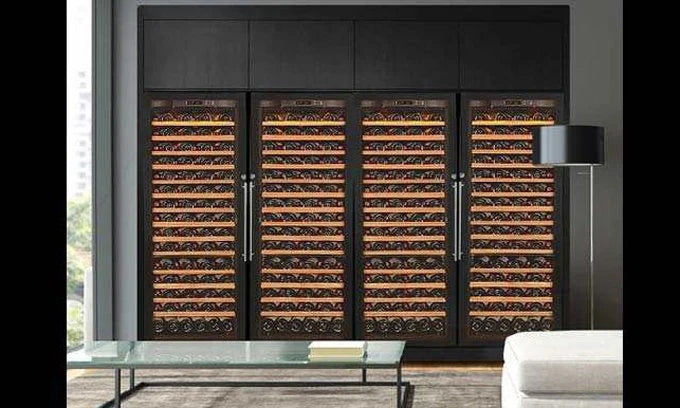
Wine fridges aren’t exactly known for being energy efficient. Under the latest EU energy labels, many models fall into the lowest categories—yet they run 24 hours a day, all year round.
But here’s what most people overlook:
how you use your wine fridge matters more than the energy rating itself.
With a few simple manual adjustments, you can significantly reduce electricity use, lower running costs, and even improve how your wine is stored. No upgrades required.
Here’s how to do it.
1. Get the Placement Right (Most Important Step)
Where you place your wine fridge has the biggest impact on how efficiently it runs.
If it’s positioned next to an oven, radiator, dishwasher, or in direct sunlight, the appliance has to constantly fight external heat. That forces it to work harder and use more energy.
What to do:
- Keep it away from heat sources like ovens and radiators
- Avoid direct sunlight completely
- Leave space around the unit for ventilation (especially at the back)
Even small changes—like moving it slightly away from a heat source—can noticeably reduce energy consumption.
2. Stop Setting the Temperature Too Low
One of the most common mistakes is overcooling.
For long-term wine storage, around 12°C is ideal. Lowering the temperature further doesn’t improve preservation—it just increases energy use.
Why it matters:
- Lower temperatures require more energy to maintain
- Frequent adjustments cause the compressor to work harder
What to do:
- Set a stable temperature and leave it
- Use your kitchen fridge for quick chilling instead
Consistency is far more important than chasing the “perfect” number.
3. Keep Your Wine Fridge Properly Filled
A fuller wine fridge is actually more energy efficient than an empty one.
That’s because the bottles help stabilise the internal temperature, reducing how often the cooling system needs to switch on.
What to do:
- Aim to keep it around 70–90% full
- Add water bottles if you don’t have enough wine
- Avoid overpacking, as airflow is still important
This simple adjustment helps your fridge maintain temperature with less effort.
4. Reduce How Often You Open the Door
Every time you open your wine fridge, warm air enters and disrupts the internal temperature.
The fridge then has to use extra energy to cool everything back down.
What to do:
- Decide what you need before opening the door
- Avoid browsing or rearranging unnecessarily
- Keep the door open for as short a time as possible
This small habit can make a noticeable difference over time.
5. Clean Your Wine Fridge Regularly
Dust and dirt can quietly reduce your fridge’s efficiency.
When vents and fans are blocked, heat can’t escape properly, forcing the appliance to work harder.
What to do:
- Vacuum vents every few months
- Wipe down internal fans and air channels
- Remove any dust buildup at the back of the unit
Regular cleaning can improve efficiency by up to 10–15%, making it one of the easiest wins.
6. Check the Door Seal
A poor door seal allows cold air to escape and warm air to enter continuously.
This often goes unnoticed but can significantly increase energy usage.
How to test it:
Close the door on a piece of paper. If it slides out easily, the seal may not be tight enough.
What to do:
- Clean the rubber seal regularly
- Check for cracks or wear
- Replace it if necessary
A tight seal keeps the cold air in and reduces wasted energy.
7. Simplify Dual-Zone Settings
Dual-zone wine fridges are useful for serving different wines at different temperatures—but they’re less efficient.
Running multiple temperature zones requires more energy.
What to do:
- Set the two zones only 4-5 degrees apart if possible.
- Use a single zone for storage and another zone for serving.
If you’re mainly storing wine, you don’t need separate zones. A single stable temperature is enough.
8. Control the Room Temperature
Your wine fridge doesn’t operate in isolation—it responds to its environment.
If the room is warm, the fridge has to work harder. If the room is cool, it runs more efficiently.
What to do:
- Keep the room temperature stable
- Use blinds or curtains to reduce heat from sunlight
- Avoid placing the fridge in garages or conservatories
Improving the surrounding environment can have a big impact on energy use.
9. Don’t Rely Too Much on Energy Ratings
Modern energy labels can be misleading, especially for wine fridges.
Many models are rated in lower categories, but that doesn’t necessarily mean they are inefficient—it reflects stricter standards.
What really matters:
- Your temperature settings
- How often you open the door
- Placement and maintenance
In many cases, user behaviour has a greater impact than the rating itself.
Final Thoughts: Efficiency Comes Down to Habits
Wine fridges run constantly, so even small inefficiencies add up over time.
The key takeaway is simple:
you don’t need to replace your wine fridge to make it more efficient—you just need to use it smarter.
Focus on:
- Proper placement
- Stable temperature settings
- Regular cleaning
- Better everyday habits
These small changes can reduce your energy use, lower your electricity bills, and create a better storage environment for your wine.