
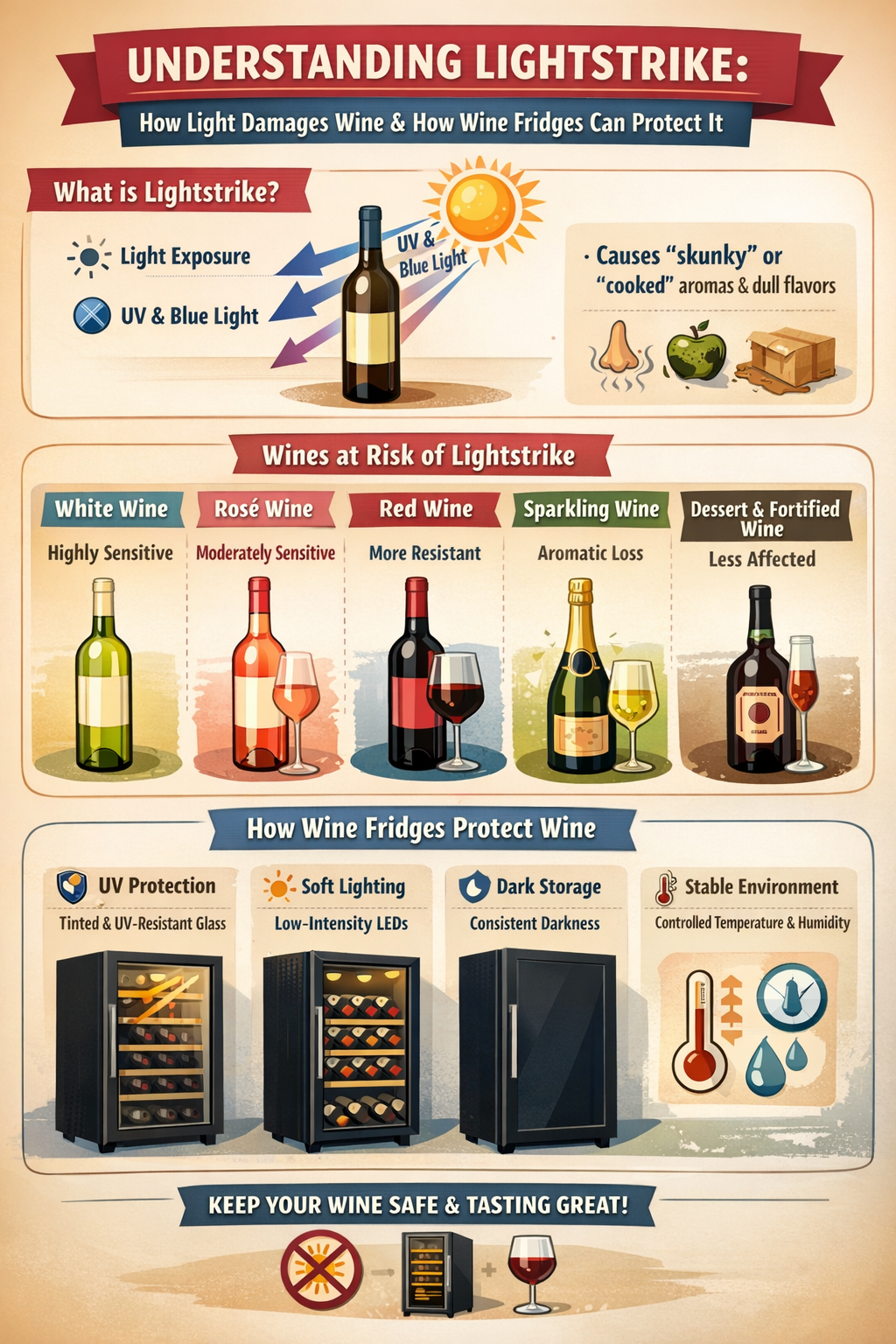
Understanding Lightstrike: How Light Damages Wine—and How a Wine Fridge Can Protect It
When most people think about preserving wine, they think about temperature and humidity—but light exposure plays a huge role in how wine ages and tastes. In the wine world, the term “lightstrike” refers to a chemical reaction that occurs when wine is exposed to ultraviolet (UV) and high-intensity visible light. This reaction alters the wine’s aroma and flavour in ways that can’t be reversed. Whether you’re a casual wine drinker or a budding collector, understanding lightstrike—and how to prevent it—is essential to ensuring every bottle tastes as the winemaker intended.
What Is Lightstrike?
Lightstrike is a form of photochemical damage. When certain wavelengths of light, especially UV and blue light, penetrate a wine bottle, they interact with compounds in the wine—particularly phenolics and sulfur compounds—and cause them to break down or rearrange. This chemical alteration creates off-aromas and off-flavours. Wines affected by lightstrike often take on a “cooked”, “skunky”, or “wet cardboard” smell and a dull, muted flavour profile.
This phenomenon has been studied and confirmed in scientific research. Light can accelerate oxidation processes and generate new compounds that negatively affect the wine’s bouquet and taste.
How Lightstrike Impacts Different Types of Wine
Not all wines are affected by lightstrike equally. The susceptibility varies based on color, composition, bottle type, and closure.
🍷 1. White Wines
White wines are among the most vulnerable to lightstrike. That’s because:
-
They generally have lower phenolic content than red wines. Phenolics can help act as buffers against oxidative reactions.
-
They are often bottled in lighter-colored glass (like clear or green), which offers little protection against UV and visible light.
Lightstrike in white wines often manifests as:
-
Loss of fruitiness
-
A sense of “flattening”
-
Development of off-aromas like cooked apples or wet paper
Even high-end white wines can degrade rapidly when exposed to constant light—think about wine racks near windows or kitchen counters under bright lights.
🍷 2. Rosé Wines
Rosés are somewhat in between whites and reds. Because they’re made with limited skin contact, rosés generally contain fewer phenolic compounds than reds. Many rosés are bottled in clear glass to showcase their attractive color, but that also means they allow more light in.
The result? Rosés can develop similar off-aromas to white wines if exposed to too much light, often losing their delicate floral and fruity profiles.
🍷 3. Red Wines
Red wines are more resilient to lightstrike for a couple of reasons:
-
They have higher phenolic content (like tannins and anthocyanins) which help protect against oxidation and light-induced reactions.
-
They’re often bottled in darker glass (brown or deep green), which blocks more UV wavelengths.
However, that’s not to say reds are immune. Extended light exposure—especially sunlight—can still accelerate aging and diminish nuanced aroma compounds. Over time, you might notice reds losing vibrancy or developing a tired, flat character.
🍷 4. Sparkling Wines
Sparkling wines can also be affected by light, especially when bottled in clear or light green glass. The delicate aromatics in Champagne, Prosecco, and other sparklers can fade or shift with too much light. A sparkling wine’s freshness and floral notes are often among the first casualties of light exposure.
🍷 5. Fortified and Dessert Wines
Wines like Port, Sherry, or Sauternes often undergo oxidative aging and are generally less sensitive to light-related damage than still wines. Still, prolonged light exposure can dull their complexity and alter sweet and oxidative notes in undesirable ways.
Where Lightstrike Happens: Everyday Risks
People often underestimate where lightstrike can occur. Here are everyday scenarios where wine can be damaged:
-
Backlit wine racks (especially near windows)
-
Open kitchen shelving near sunlight
-
Bright LED lighting in tasting rooms or restaurants
-
Clear glass wine bottles on display
-
Cellars with weak insulation from light
Even indoor artificial lighting can contribute. Standard fluorescent and LED lights emit wavelengths that can accelerate wine degradation over time—especially when bottles sit in those lights for weeks or months.
The takeaway? Lightstrike isn’t just a concern for cellar storage—it’s relevant in homes, restaurants, shops, and anywhere wine is stored in light.
How Wine Fridges Help Prevent Lightstrike
A well-designed wine fridge is one of the best defenses against light-related damage. Here’s how:
📦 1. Tinted or UV-Resistant Glass Doors
Many quality wine fridges use tinted glass with UV filtration. This significantly reduces the amount of harmful light that reaches the bottles while still allowing you to view your collection.
🛑 2. Controlled Interior Lighting
Unlike kitchen refrigerators—which often use bright LED lights—wine fridges typically use:
-
Low-intensity lighting
-
Soft interior LEDs
-
Lighting that is only on when the door opens
- Lighting is colours considered least impactful on wine - especially amber
This significantly reduces exposure to damaging wavelengths.
❄️ 3. Consistent Darkness When Closed
A primary advantage of a wine fridge is that bottles spend most of their time in darkness. Unlike open shelving or countertop storage, the closed environment protects wine from constant ambient light.
🌡️ 4. Complementary Protection with Stable Temperature
It’s worth noting that while lightstrike is a distinct issue, light exposure often coincides with temperature fluctuations—another enemy of wine. A quality wine fridge stabilises temperature and humidity, which compounds the protective benefit. Together, stable conditions and reduced light exposure preserve both aroma and structure over time.
Tips for Minimising Lightstrike at Home
Even with a wine fridge, there are additional steps you can take to protect your bottles:
✔ Store in Darkness Whenever Possible
Keep wine out of direct sunlight and bright interior lights. If you use open racks, choose shaded areas.
✔ Rotate Wines Occasionally
Long-term stored bottles benefit from occasional rotation so that any light exposure is spread evenly and minimised.
✔ Opt for Dark Glass Bottles
When possible, choose wines in brown or deep green glass, especially for long-term aging.
✔ Avoid Displaying Older or Collectible Wines
Keep your most prized bottles in a dedicated wine fridge or cellar—not on display under bright lights.
Conclusion: Light Matters More Than You Think
When coaxing the best out of a bottle of wine, many of us think about temperature or humidity. But lightstrike is an invisible threat that can silently alter wine quality long before you pour a glass. From the delicate aromatics of a white Burgundy to the subtle florals of a dry rosé, many wines are vulnerable to light-induced damage.
The good news? With awareness and proper storage—especially using a quality wine fridge—you can dramatically reduce the risk. By controlling light exposure and stabilising temperature, a wine fridge protects the integrity of your bottles so that when you finally open them, the wine tastes the way it was meant to.
Whether you’re a seasoned collector or just beginning your wine journey, understanding lightstrike and how to prevent it is a simple step toward better-tasting wine—every time.